Let's keep talking about misogyny
What the heck does this have to with with Science for Everyone? Well, the majority of scientists are not men, and they live with this every day, and not enough men are navigating the world mindful of this reality on a daily basis.
I'm assuming that you're at least vaguely familiar with the Cornell situation – we all need to know, as it is affecting the lives of our students and colleagues. It is also a mirror that we need to hold up to our own institutions. Here's a summary from the BBC. In a single sentence: a student at Cornell reported to university police that she was sexually assaulted by a group of seven students – the details are horrific – and ultimately Cornell handled the situation by punishing the rapists by requiring them to write an essay. For more information, here's an independent website full of information that is designed to support Jane Doe.
I do not have it in me to write an essay, but there are related things I need to share, so here they are, in no particular order:
- Please talk to your students about it. Unless you're only teaching a tiny seminar, you your classroom is populated with one or more survivors of sexual assault. The Cornell Incident is in the broader conversation and it matters to your students that you are concerned about their safety and well-being. What to say? For starters, may acknowledge that you understand that the broader circumstances of the Cornell situation are also at play everywhere, and that while you cannot be confident in the capacity of your institution to provide support and accountability, let them know that you will believe them and are committed to support them in whatever way might be possible.
- Educate yourself about the process and resources at your own institution¹. It's not enough to know whether you're a mandated reporter. Is there a confidential advocate (such as here at my university) who can walk survivors through their options (including a report to non-campus police) without triggering the Title IX process, and know what resources are available off-campus as well. If there is an office, do you know enough about it for it to be trusted? In the event a student comes to you for support or to merely notify you what they're going through, you should know not only what you might say, but also have a clear understanding of the chain of events that may follow depending on the choices that a student makes.
- Be aware that in 2020, the Department of Education weaponized the Title IX rules to empower perpetrators to cause further harm as a part of the university investigative process.
- Recognize the clear throughline between the environment that fostered the gang rape at Cornell and the perennial misogyny pervading higher education and the sciences, including other forms of sexual assault, hostile environments, abuses of power in sexual advances, and gendered biases in career advancement and access to opportunity. "Patriarchal norms and practices normalize sexual violence in society." If we're going to get really serious about the prevention of sexual violence, that means we've got to get serious about other gendered misconduct and abuses of power.
- Did you know that when women stick their necks out at work to address misogyny in the workplace, they not only get ignored but also experience harm to their careers, but academic men are not harmed when they work against workplace misogyny and sexism, and the work is taken more seriously by institutions? Hey guys, how should this inform our actions and choices?
- Are you doing a faculty search? Do you know about the Academic Sexual Misconduct Database, which has more than 1000 entries, and has been around for over 10 years, and at this writing has 1137 entries? Do you realize that most incidents are not in the database, and due diligence is necessary to make sure that someone's not passing you the trash?
- On a day to day basis, what can you do? That's a very long list – but you can start with bystander intervention training so that you are prepared when you inevitably end up in a situation where a sexism is happening.
Okay that's it. Well, if this missive isn't enough, here's more from the archives:
- Actions required of men to advance gender equity in academia
- On creating an academic environment that is hostile to sexual misconduct
- Firing scientists for sexual misconduct is not enough
- Is the problem implicit bias or is it sexual harassment?
- We know exactly what to do about sexual misconduct in the field
- Preventing abuses of power in grad school
- Planning for safe and inclusive field research
- Know that it's impossible for men to babysit their own children.
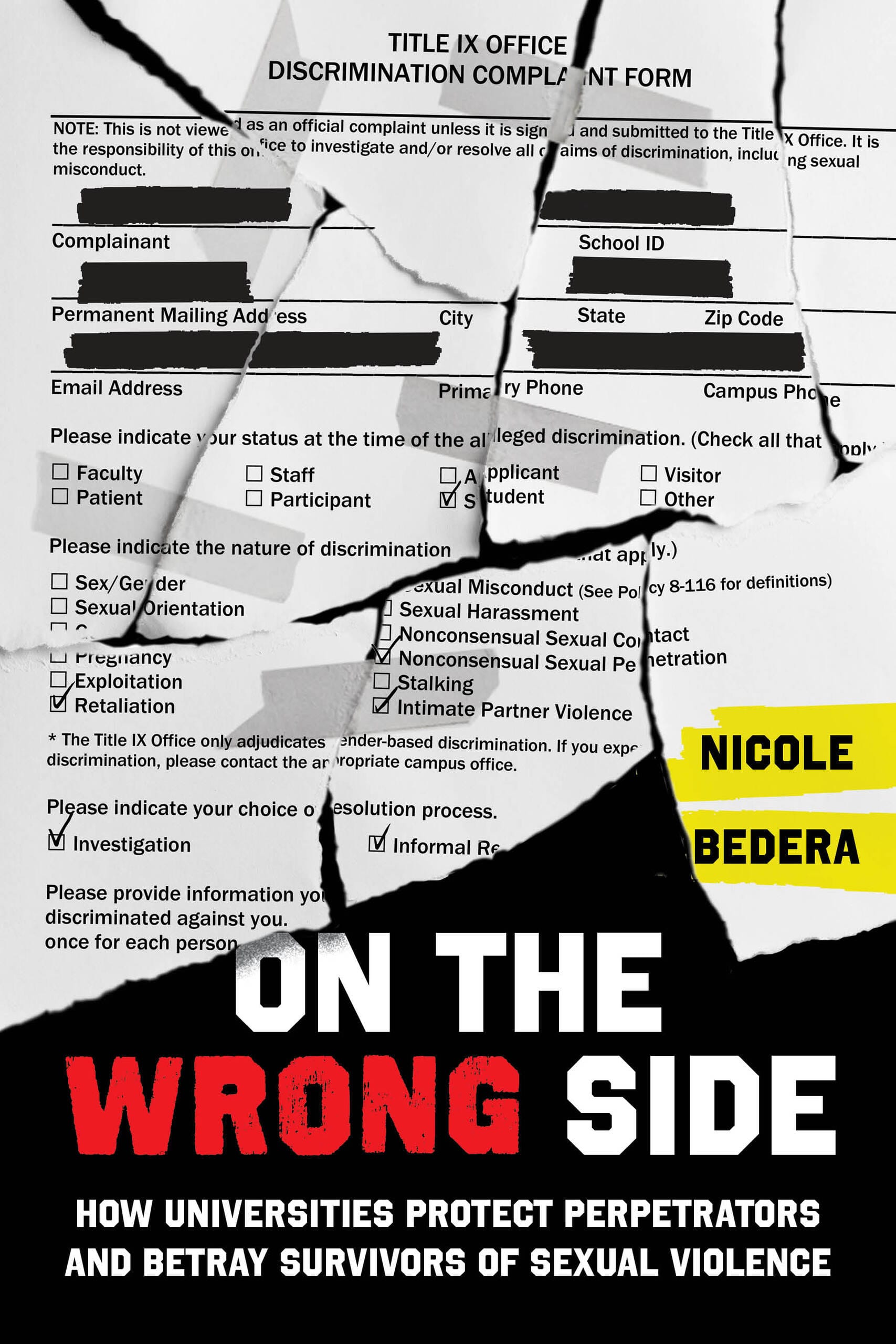
¹ For extra credit, pick up a copy of Nicole Bedera's On the Wrong Side: How Universities Protect Perpetrators and Betray Survivors of Sexual Violence. Then give it to a colleague. It's not an easy read but we should bear witness and understand how the Title IX process plays out. (First person who wants my copy, leave a comment on here to claim it and then drop me an email with an address. I'm a few time zones away from the book but we'll be reunited in a few weeks and media mail is so cheap as to be negligible!)
Member discussion