Don't let anybody tell you what your academic-life balance is supposed to be
It's a trope – and yet true to my lived experience – that email auto-replies from European collaborators are like, "I'm on holiday for five weeks, I'll write back when I get back to work. Whereas folks in the US might have a 4- day auto-reply. And they write back three minutes later.
For the past couple weeks, I've been doing science at a rate that I don't think I ever have before. I've been spending my evenings and weekends at my desk, analyzing and writing. Sure, I went grocery shopping, went for the occasional walk, made some good meals (e.g., a corona bean and farro soup that I got to stir for several hours; a notably good chopped salad) but most of the time I was anchored to my computer. And happily so. Sometimes giddily so. Though the weather has been glorious here in Pasadena the whole time, too, though I've been watching the blizzard, and and the state-sponsored crimes against humanity not that far away. I find it a rather miraculous circumstance of my own mental health that I'm pulling this off. I haven't felt this well adjusted in, well, ever? At least I don't remember feeling this well calibrated.
It's been more years than I can count since I've done science like this. At some point well before the pandemic, I intentionally capped my working hours to resemble a normal job. I still had more research-related travel, but for the most part I stuck to that. Until recently.
The last time I've put in this much time was the period of utmost insecurity, as a postdoc attempting to ramp up a new project, attempting to get dissertation papers out, and attempting to land a job to go to after the one-year contract ends. (I suppose the tenure denial year lit a fire under me, too.) But those were anxiety and desperation, while has been all good. What's up with that?
Is it the delayed impact of my sabbatical which ended in August? Have I finally gotten used to being an empty nester after four years? Is it because all the bread from my sandwich-generation mess is gone? Is it because I've finally stumbled on the right meds? Or I've finally recovered from the trauma of my first tenure-track position?
I don't think it's any of that. I've been through enough of these cycles that I recognize what's going on. Expectations at work evolve, my mental health varies, the needs of loved ones change, my interest in the science itself waxes, the relative groove in my lab can be reinforcing or not. At the moment, all of these things are aligned in a way that lowers the activation energy for me to sit down and get some science done. For the moment.
The cycle is detectable enough if you were to look at my google scholar profile chronologically. (And ignore the blog posts that have landed the occasional citation. Though I suppose me doing this for the past 13 years isn't not an indicator of something?) You'll notice drier spells in the mid 2ooos and since the turn of the current decade. But that whole time, I was as much of a scientist as I was the year before and the year after. My worth (and yours!) to the scientific community, and the value of one's intellectual contributions, isn't a 1:1 correspondence to one's h-score. And the whole time I've not been churning out papers, I've still been doing the work and showing up for others. Someone who spends twice as much time on research – someone who produces twice as many publications – isn't twice as valuable to the community. Some of the most valuable scientists aren't even publishing in peer-reviewed journals. There are so many ways to make contributions, even if the reward structure is monomaniacal.
I also recognize that the only way I'll be pushing research product out the door at anything more than a trickle is having the capacity to put in the occasional evening and weekend. It's not that way for everybody, but maybe it is for everybody who teaches at a high-teaching load regional public university? It takes a few years in a university with research expectations and a base teaching load of a 4/4 to really figure out the parameters of what is and isn't feasible, and maybe longer to figure out what's healthy.
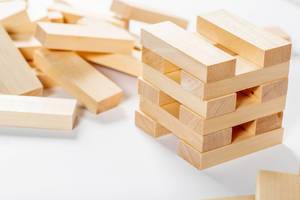
Regardless of your circumstances, you personal time never ever has to be your research time. Yes, everybody needs a healthy work-life balance. But what constitutes one person's balance is another person's collapsing jenga tower. None of us are entitled to expect any more from our peers, advisees, employees, or supervisors than a normal 40-hour work week. But if someone wants to put more in, and it's not harming themselves or anybody else, is that so wrong?
Well, actually, perhaps, just a little bit, maybe? I do feel and recognize a tension when it comes to surplus time for doing science. Because this time is not equitably distributed. There are some (often whiter and wealthier) people who have all the time and comfort in the world to do science. As kids they can get all kinds of experience by volunteering in a college lab, and then in college, will volunteer to work with dolphins and sea turtles, and when their superior experience lands them in a fancy grad program they will have enough financial comfort to take risks, and yadda yadda, you know about the Matthew Effect, right?
Just today I was talking with a scientist who I really appreciate and admire who for years has been experiencing the opposite-of-the-Matthew-effect. The Wehttam Effect? In my eye, they are an absolute rockstar who are doing great work, but they feel (and not incorrectly so) that at every critical transition, to high school, to college, through the pandemic, after graduation, that they've been handed circumstances that take them away from doing science, all of which is being amplified because of the particular plague that has festered over in the US. This person literally can't spend all their spare time doing science, even if they wanted to! Depending on how you read their CV, you could be really damn impressed, or you could think it lackluster. It all depends on how you interpret achievement relative to opportunity (if you search that phrase, by the way, you'll see a bunch of Australian universities pop up - it's a metric they formally use. How about that!)
I don't think the solution to our inequities is to prevent people from doing science more than 40 hours per week. I think the solution lies in how we value the scientific contributions of ourselves and others. How about we look at contributions in a more holisitic (and more useful) manner? (This is an example I keep pointing out: You know Joseph Connell, the community ecologist whose barnacle system is in every textbook and who did so much spectacular work on biodiversity? After he published his dissertation, he next papers came out right as he was coming up for tenure, six years later. He spent almost a decade working in this system doing great science, today he wouldn't have even gotten a job, much less tenure at the R1 that hired him fresh out of grad school)
Doing science is a job, and being a professor is a job. But you have to admit that it's quite a different job because we have so much choice over what we are doing. (While also recognizing that universities are making it more and more difficult to exercise that choice, because of the administrative load that we're now carrying. Being a professor changed 20 years ago. And not for the better.) It shouldn't come as a surprise that some folks do research as a hobby. It would be kind of sad if you chose to be a science professor and once in a while, when you hit the end of the day, you weren't just a little disappointed that you couldn't spend more time on the project of your own creation?
When people ask me about my hobbies, I usually say something like, "Uhhh, I read, and I cook, and I like to be outside but lord knows I'm not camping or backpacking much anymore.") And I suppose reading and cooking and outdoorsing are actual hobbies or interests. But sometimes it's just as fun to do the science. For a while that wasn't in me. And now, at least for the moment, it is. It was okay then, and it's okay now. How I choose to spend my personal time is okay because it is my choice, and how you spend your time is your choice, and we need to respect that in one another.
It's fine when you're in grad school. It's fine when you're a postdoc. It's fine when you're working in the field. It's fine when you're at the bench. It's fine when other people in the lab group are sick and behind on the work. It's fine when your PI is leaning on you because they feel that their job depends on your choice to work beyond normal working hours. It's always fine to treat science like a job and nothing more. Anybody who pushes back against is a person who deprioritizes your well being over... something else.
We all should be working to build a culture where everybody always has the choice over their own balance between personal time and science time. Even when they want to make the personal time the science time.

Member discussion